If you have ever wondered whether you are doing enough, the federal guidelines give a clear starting number. They are written for the general adult population, so use them as a reference point and talk with your doctor about anything specific to you.
The weekly numbers
- Aerobic activity: the CDC says adults need 150 minutes of moderate-intensity physical activity a week. That can also be 75 minutes of vigorous-intensity activity, or an equivalent mix of the two.
- Strength: adults need at least 2 days of muscle-strengthening activity each week.
- Range: the Physical Activity Guidelines describe the aerobic target as at least 150 to 300 minutes of moderate-intensity activity each week.
The CDC gives brisk walking as an example of moderate intensity, and jogging or running as examples of vigorous intensity.
You can split it up
You can spread your activity out during the week and break it up into smaller chunks of time.
CDC, Adult Activity: An Overview
Five 30-minute sessions add up to 150 minutes. So do three 45-minute sessions plus a short walk. The same CDC page adds that some physical activity is better than none.
How that maps to a week at LP Fitness
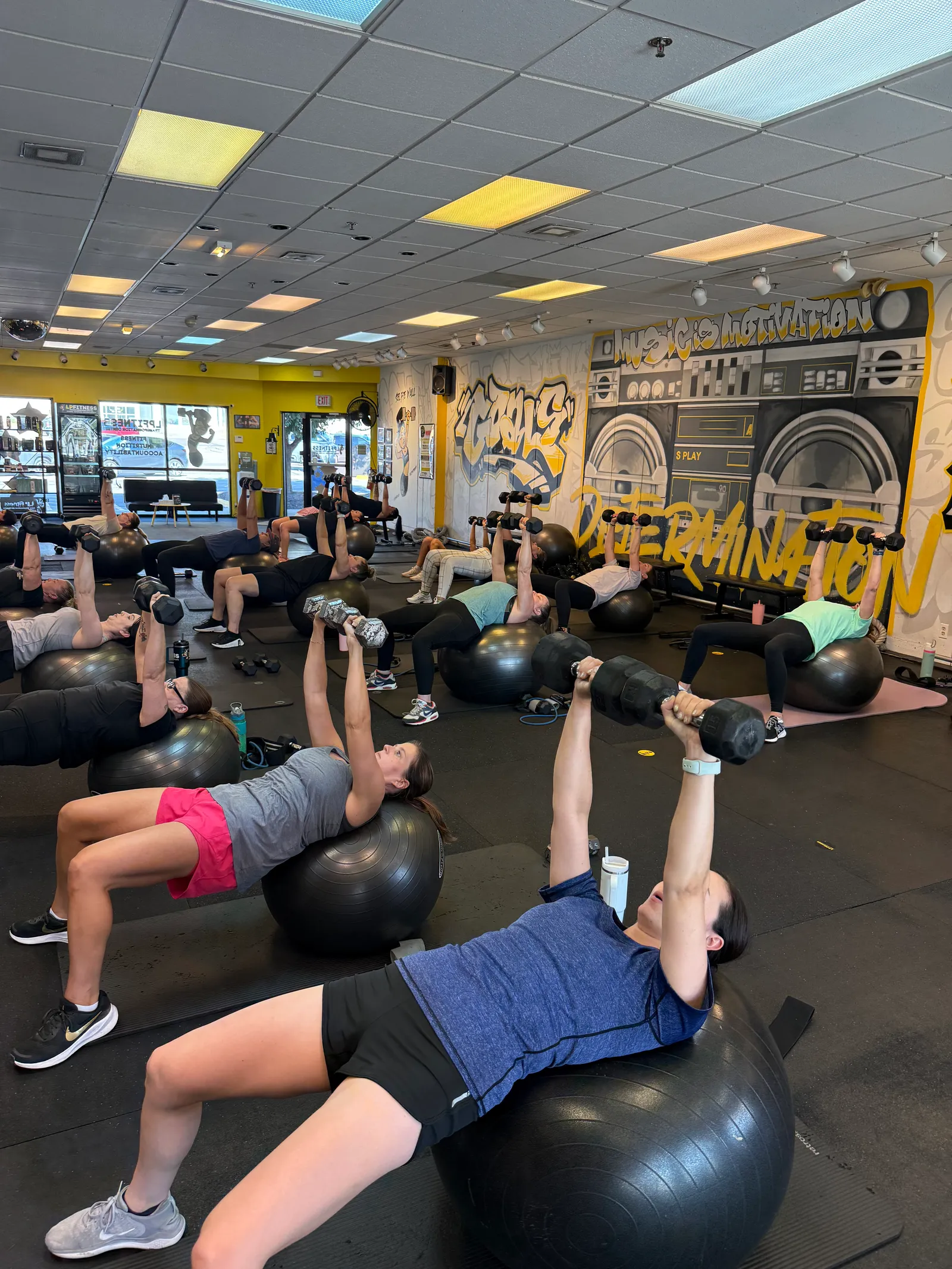
Our memberships are built around 3, 4 or 5 coach-led sessions a week, and the schedule mixes cardio formats like Bootcamp with strength formats like Total Body Toning and LIFT. A coach can help you pick a mix at your goal-setting meeting.